
1. The difference at a glance.
| Pop-up camper | Teardrop camper | |
|---|---|---|
| Price incl GST | A$35,990 each | A$25,990 each |
| Sleeps | 4 people | 2 people |
| Stock update · 27 Sep 2026 | 3 trailers | 2 trailers |
| Power included | Batteries and inverter | Batteries, inverter, charger and solar panel |
| Water storage | Ask Max for capacity | 160 litres |
| Brakes | Mechanical | Mechanical |
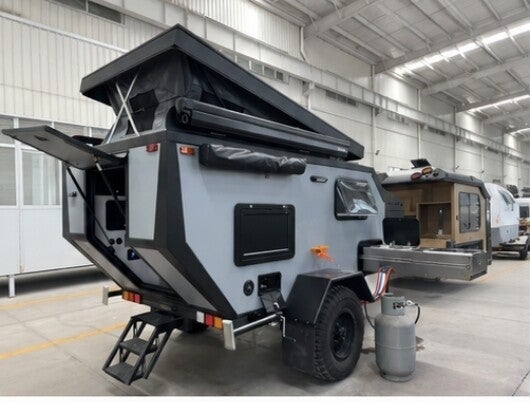
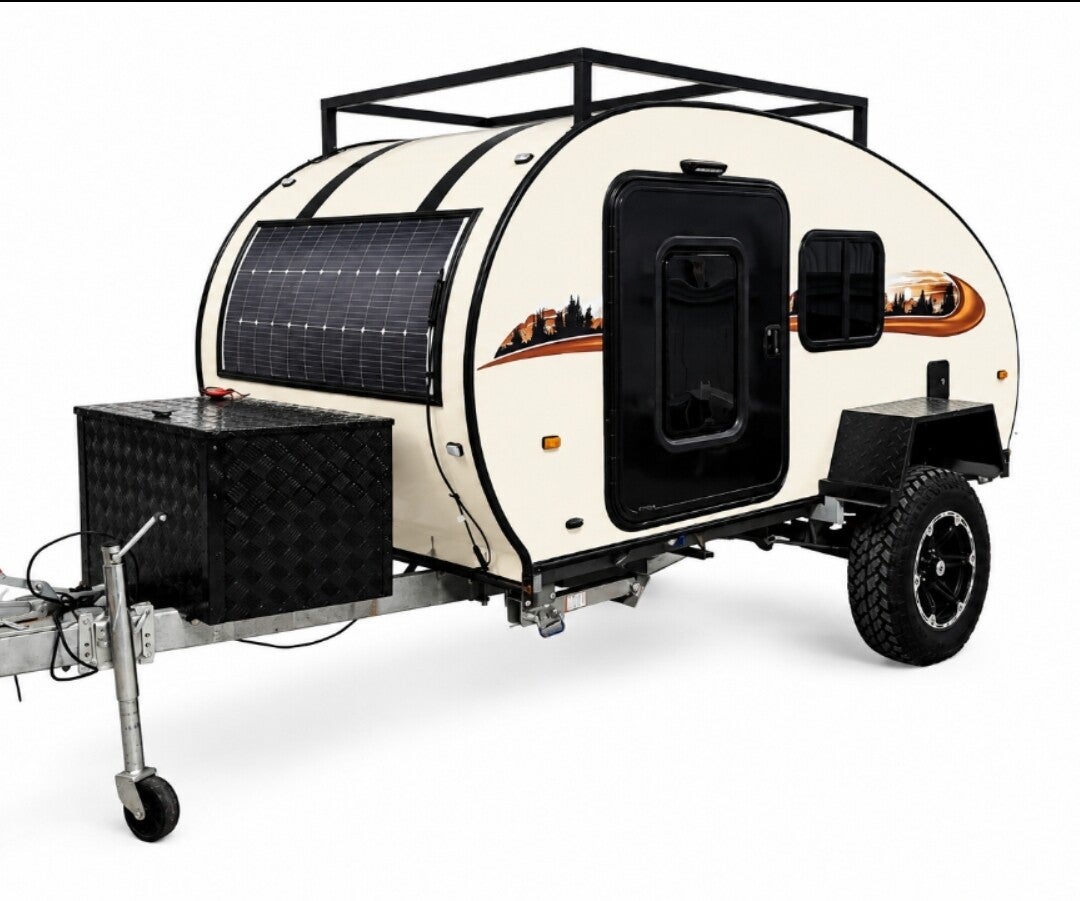
| Inside | Roof raises above the body; seating, dining table and a sleeping platform | Enclosed sleeping cabin with mattress, windows and cabinetry |
| Kitchen | External kitchen slides out from the side | Rear galley under a lift-up hatch |
| Pictured kitchen | Sink and two-burner cooktop | Sink, worktop and cabinets; one layout adds a slide-out fridge |
| Storage | Exterior compartments and interior cabinetry | Front storage box, cabin cabinetry and overhead storage |
Prices, sleeping capacity, stock and listed inclusions were supplied by Maxamus on 27 September 2026. Gallery views show different configurations. Confirm current availability and the equipment of the exact camper before purchase.
2. Sleeping and inside space.
The teardrop is built around its sleeping cabin. You enter through the side door onto the mattress, with windows, internal cabinets and overhead storage around you. Most of your living happens outside, with the cabin as a sheltered place to sleep.
The pop-up camper raises its roof above the main body to open up the interior. The gallery shows a sleeping platform, bench seating, a dining table and cabinetry. Choose it if you want room to sit inside, such as on a cold or wet evening.
The teardrop sleeps two people; the pop-up sleeps four. Ask Max for the mattress dimensions and to demonstrate how the sleeping spaces are arranged.
3. The kitchen.
On the teardrop, the kitchen is at the back. Lift the rear hatch and the galley opens to the outdoors, with the hatch overhead. A sink and stove are included, along with 160-litre water storage. The teardrop also includes batteries, an inverter, charger and solar panel. A smart TV is an optional extra; a fridge shown in some gallery layouts is not a confirmed inclusion.
The pop-up camper's kitchen slides out from the side of the body. The pictured kitchen has a stainless sink and a two-burner cooktop. The outdoor kitchen, batteries and inverter are included. Ask Max to confirm water capacity, appliance details and any additional power options for the pop-up.
4. Arriving at camp.
With a teardrop, setting up starts with opening the rear hatch. The cabin is ready to use without changing its shape.
The pop-up camper has a lowered position for travelling and a raised one at camp. You raise the roof, extend the steps and slide out the kitchen. Ask Max to show you the process and how long it takes in person.
5. Towing and storage.
Both camper models have mechanical brakes. Compare the figures for the exact trailer, not only the format. Ask for the external dimensions, tare weight, maximum loaded weight (ATM), ball weight, coupling and braking system. Remember to include water, gas and gear in the loaded weight.
Your vehicle's owner's manual states its towing limits, which must not be exceeded. The towbar and coupling ratings also apply. Read the NSW Government's guidance on towing a trailer or caravan ↗. In another state or territory, check the rules with its transport authority.
Also measure the space where you will keep the camper at home, including the height of a carport or garage door.
6. Questions to bring to Max.
- The mattress dimensions and how the sleeping spaces are arranged.
- The dimensions, tare, ATM and ball weight of each camper.
- The kitchen equipment, water, gas and power systems included.
- How the pop-up roof is raised and lowered.
- The price, availability and any warranty for the exact trailer.
Call Max on 0404 887 112 or email Maxamus with your tow vehicle and how you plan to camp.